

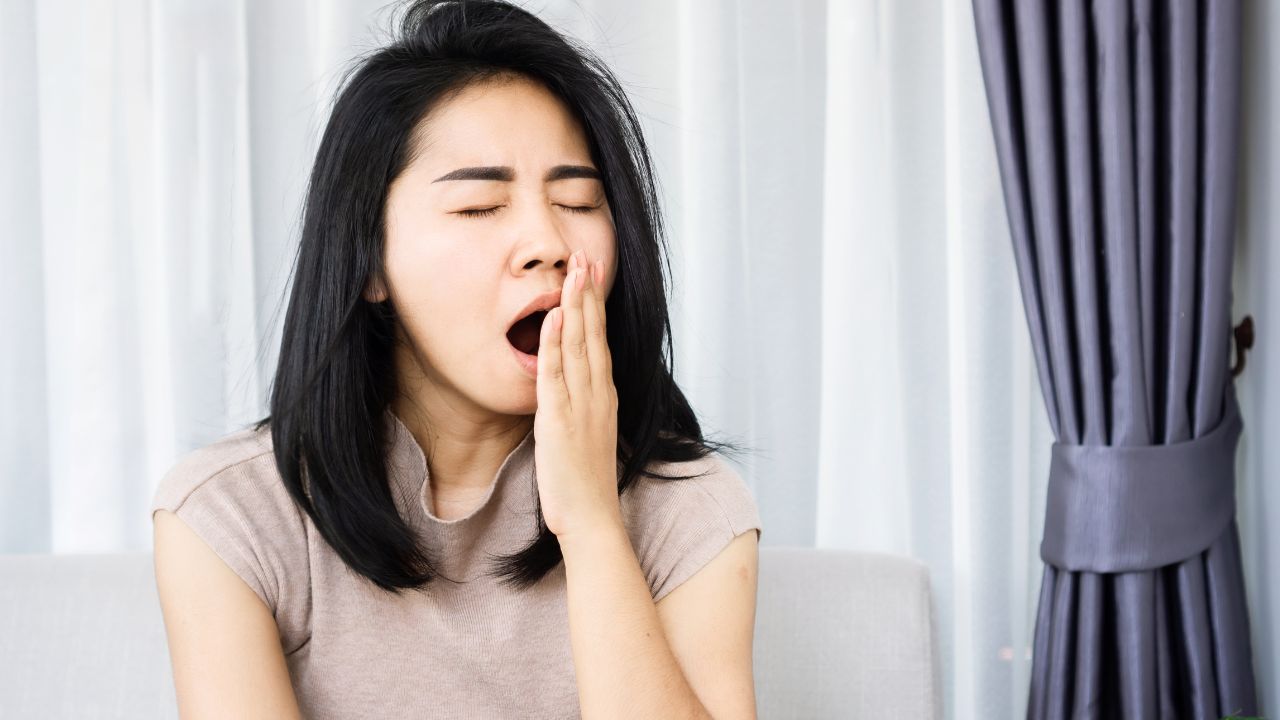
Yawning is one of the most common human behaviors, yet it often leaves us wondering what its purpose is. Almost everyone yawns when they feel tired, bored, or mentally drained. But this is not just a random habit.
A 2002 research review showed that yawning is closely linked to how the brain regulates tiredness and alertness. In this article, we clearly explain why we yawn when we are sleepy or drowsy and what your body is trying to tell you when it happens.
Yawning Is a Natural Body Reflex
A yawn is an automatic reflex that involves opening the mouth wide, taking a deep breath, and stretching the jaw and facial muscles.
You do not consciously decide to yawn; it happens on its own. Humans, animals, and even birds yawn, which suggests it serves an important biological function.
Researchers found that yawning usually occurs during moments when the brain is changing states, such as before sleep, after waking up, or during periods of mental fatigue. This timing is a major clue in understanding its purpose.
Learn more about the reasons for excessive fatigue and sleepiness.
The Main Reason We Yawn When We Feel Sleepy
The clearest explanation for why we yawn when we are sleepy or drowsy is that yawning helps the brain stay alert when it starts to slow down.
When you are tired, brain activity decreases, focus drops, and mental performance weakens. Yawning acts as a temporary boost to help the brain function more effectively.
Although yawning does not replace sleep, it helps delay sleep for a short time by increasing awareness and mental clarity.
RELATED: Why Am I Feeling Exhausted and Sleepy All the Time?
Yawning Helps Cool the Brain
One of the strongest scientific explanations for yawning is the brain cooling theory. When you are tired or drowsy, your brain temperature can rise slightly due to extended mental activity or lack of rest.
Yawning helps cool the brain in several ways:
- Drawing in cool air
- Stretching the jaw muscles
- Increasing blood flow to the head
- Cooling the brain allows it to work more efficiently, which is another key reason why we yawn when we are sleepy or drowsy.
Click here to learn more about why you feel sleepy all the time, even when you get enough sleep.
Yawning Increases Alertness for a Short Time
In a review of studies published in 2013, researchers found evidence that yawning also stimulates the nervous system. The deep breath and muscle stretch increase heart rate and blood circulation, which can temporarily improve alertness.
This is why yawning often happens when:
- You are fighting sleep
- You are bored or unfocused
- You are trying to stay awake in class or during work
- Your body uses yawning as a short-term strategy to stay awake until you can properly rest.
Learn more about the benefits of sleeping with garlic under your pillow.
It Is Not About Needing More Oxygen
Many people believe yawning happens because the body lacks oxygen. However, scientific studies show this is a myth. Increasing oxygen levels or reducing carbon dioxide does not stop yawning.
Instead, yawning is linked to brain regulation, not breathing needs. This discovery helped scientists better understand why we yawn when we are sleepy or drowsy, focusing on brain function rather than oxygen intake.
Learn more about why men should drink olive oil before going to sleep.
Brain Chemicals Trigger Yawning When You Are Tired
Researchers found that yawning is influenced by neurotransmitters, chemical messengers in the brain. These include dopamine, serotonin, and acetylcholine, which are all involved in sleep, mood, and alertness.
When you become sleepy, the balance of these chemicals changes. This shift activates the yawning reflex, signaling that the brain is moving toward rest. These chemical changes are another clear reason why we yawn when we are sleepy or drowsy.
RELATED: Is Sleeping On Your Right Side Bad For Your Heart?
Why Yawning Is Contagious
Yawning is famously contagious. Seeing or hearing someone yawn can make you yawn too, especially when you are already tired.
Scientists believe contagious yawning is linked to empathy and social awareness. It also happens more often when people are fatigued, reinforcing yawning’s connection to drowsiness and reduced alertness.
Learn more about whether it is healthy to sleep during the day and be awake at night.
Yawning Is Your Body’s Signal to Rest
According to Medical Hypotheses, 2006, frequent yawning is one of the body’s earliest warning signs that you need sleep. While an occasional yawn is normal, repeated yawning throughout the day may indicate:
- Lack of sleep
- Poor sleep quality
- Mental exhaustion
- Prolonged concentration
Understanding why we yawn when we are sleepy or drowsy helps us recognize when our body is asking for rest instead of more stimulation.
Click here to learn more about whether it is dangerous to sleep with your cell phone.
When Excessive Yawning May Be a Problem
Researchers found that yawning is harmless. However, excessive yawning combined with symptoms like dizziness, confusion, or extreme fatigue may signal underlying health issues such as sleep disorders or stress-related conditions.
If yawning becomes disruptive or unusual, medical advice may be helpful.
RELATED: 5 Reasons Why People Die When Sleeping
Does Yawning Mean You Are Not Getting Enough Sleep?
According to the Journal of Family Medicine, yawning is normal. Frequent or intense yawning may signal sleep deprivation. Teens and adults who do not get enough sleep often yawn more during the day.
Lack of sleep affects attention, mood, and reaction time. In some cases, excessive yawning may be one of the first signs that your sleep schedule needs improvement. This supports the idea of why we yawn when we are sleepy or drowsy as a warning sign from the body.
Learn more about the benefits of different sleeping positions at night.
Medical Conditions Linked to Excessive Yawning
According to the Sleep Medicine reviews, yawning is usually harmless, but too much yawning can sometimes be linked to health conditions, such as:
- Sleep disorders like insomnia or sleep apnea
- Anxiety or stress
- Migraines
- Side effects from medications
- Neurological conditions, in rare cases
According to the research in the National Institutes of Health, sudden changes in yawning patterns should not be ignored.
RELATED: Sleeping Separately Reduces Many Health Risks, Specialists Say
When to See a Doctor
You should consider seeing a doctor if yawning:
- Happens constantly throughout the day
- Comes with extreme sleepiness
- Is paired with headaches, dizziness, or weakness
- Appears suddenly with no clear cause
- Interferes with school, work, or daily activities
Excessive yawning can help doctors understand underlying sleep or neurological issues.
Click here to learn more about why saliva comes out while sleeping, according to science.
What to Expect During Your Visit
During a medical visit, the doctor may:
- Ask about your sleep habits and daily routine
- Review medications and caffeine use
- Ask about stress levels and mental health
- Recommend sleep tracking or a sleep study
- Run basic neurological or blood tests if needed
The goal is to find out if yawning is caused by lifestyle habits or a medical condition.
Click here to learn more about the 7 reasons to stop sleeping with wet hair.
A Word from GetMe Treated
Yawning is not meaningless or accidental. It is a natural response that helps the brain regulate temperature, maintain alertness, and manage transitions between wakefulness and sleep.
The science clearly shows why we yawn when we are sleepy or drowsy; it is the body’s way of coping with fatigue until proper rest is possible.
The next time you yawn, take it as a gentle reminder from your brain: it may be time to slow down and get some rest.
Learn more about why sleeping with a room heater on is bad for you.
FAQs About Why We Yawn When We Are Sleepy or Drowsy
Is yawning always caused by sleepiness?
No. Yawning can also happen due to boredom, stress, or social triggers.
Can yawning help wake you up?
It may increase alertness briefly by cooling the brain.
Is contagious yawning normal?
Yes. It is linked to empathy and social awareness.
Does yawning mean low oxygen?
Research shows oxygen levels are not the main cause.
Why do teens yawn more during school?
Early school schedules and sleep loss play a big role.
Can too much yawning be serious?
In rare cases, it may signal sleep or neurological issues.