

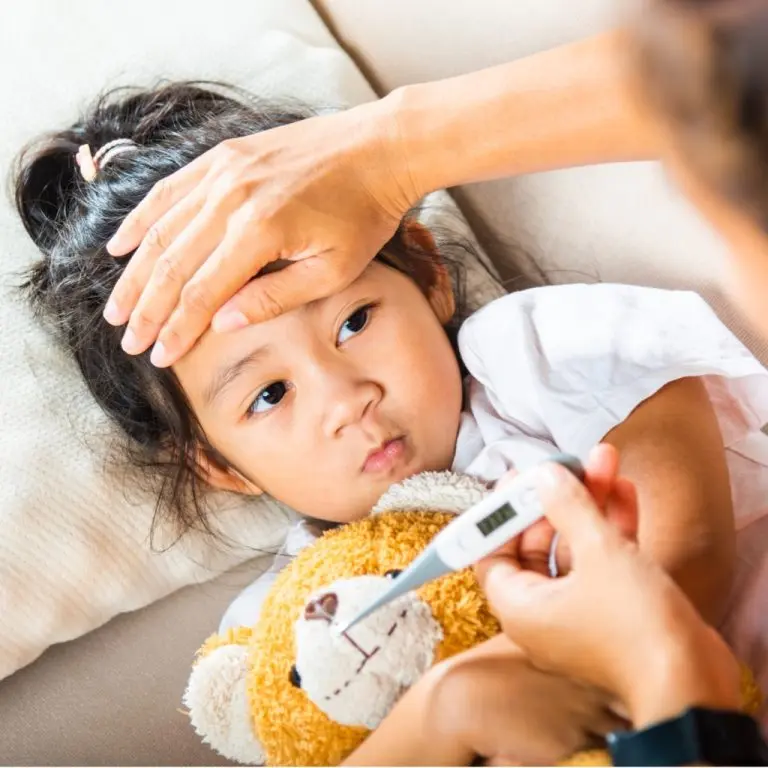
Temp of 39.9 in children is considered a high fever and often causes concern for parents. A reading of 39.9°C (103.8°F) means the body is actively responding to illness or infection.
Although this level of fever can look frightening, it does not always mean a serious medical emergency.
Knowing what it means and how to respond can help parents protect their child’s health and avoid unnecessary panic.
What Does a Temperature of 39.9°C Mean in Children?
A fever occurs when the body raises its temperature to fight germs. In children, a normal body temperature usually stays between 36.5°C and 37.5°C. Any temperature above 38°C is classified as a fever.
A temperature of 39.9°C is a high-grade fever. It most commonly appears with viral infections such as influenza, respiratory infections, stomach viruses, or COVID-19.
Bacterial infections like ear infections, pneumonia, urinary tract infections, and strep throat can also cause high fever.
According to the JR. Avner – Pediatrics in review, 2009, fever itself is not harmful in most cases. It is part of the immune response.
Doctors often focus more on how the child looks and behaves rather than the temperature alone.
Temp of 39.4 in Children: What Parents Need to Know – Learn More
Is a Fever of 39.9°C Dangerous?
Parents often worry that a very high fever can cause brain damage. Medical research from the Critical Care Medicine, 2009, shows that fever-related brain injury is extremely rare and usually only occurs when body temperature rises above 41°C.
That said, temp of 39.9 in children should always be taken seriously. At this level, children may feel weak, achy, and uncomfortable.
The main risks include dehydration, worsening infection, and febrile seizures in some children between 6 months and 5 years old.
Children under 3 months of age are at higher risk, and any fever in this age group requires immediate medical evaluation.
Learn more about My Child Has a Temperature of 40.
What to Do Medically
Medical care depends on the child’s age, symptoms, and medical history. Doctors do not treat fever alone; they treat the condition causing it.
Medical treatment may include:
- Acetaminophen or ibuprofen to reduce fever and pain
- A full physical examination
- Blood, urine, or throat tests if infection is suspected
Antibiotics are only used when a bacterial infection is confirmed. Viral illnesses do not respond to antibiotics and usually improve with rest and fluids.
The Centers for Disease Control and Prevention warns that unnecessary antibiotic use can lead to resistance and side effects.
If temp of 39.9 in children does not improve with medication or lasts more than two to three days, further medical testing is often needed.
Click here to learn more about the temperature of 39.6 in Children.
What to Do at Home
Home care helps keep a child comfortable and supports recovery.
Parents should:
- Encourage frequent fluids such as water or oral rehydration solutions
- Dress the child in lightweight clothing
- Keep the room cool but not cold
- Allow plenty of rest
Lukewarm sponge baths may help lower body temperature slightly, but cold baths, ice packs, or rubbing alcohol should never be used. These methods can cause shivering and raise body temperature.
Parents should monitor behavior closely. A child who is drinking fluids, responding normally, and making eye contact is usually less concerning than a child who is very drowsy or hard to wake.
Learn more about a toddler with a temperature of 39.
When to See a Doctor
Seek medical care immediately if:
- The child is younger than 3 months
- Fever lasts longer than 48 to 72 hours
- Breathing becomes difficult
- The child shows signs of dehydration
- A seizure occurs
- There is a stiff neck, severe headache, or rash
Parents should also call a doctor if they feel uneasy or unsure. Concern about temp of 39.9 in children alone is a valid reason to seek professional advice.
Learn more about My Child Has a Temperature of 39.
What to Expect During Your Visit
During the visit, the healthcare provider will ask about symptoms, recent illnesses, and medications given at home. Vital signs will be checked, followed by a physical exam.
Possible tests include:
- Blood tests to detect infection
- Urine tests for urinary tract infection
- Nasal or throat swabs
In many cases, no serious cause is found, and parents receive instructions for home care and follow-up. Hospital admission is only needed if the child appears very ill or complications are suspected.
Taking Cat’s Temperature Under the Armpit – Learn More
A Word from GetMe Treated
Temp of 39.9 in children is considered a high fever and can be alarming, but it is often the body’s natural response to infection.
While it does not typically signal a medical emergency, it does require careful monitoring, proper home care, and occasionally a medical evaluation.
Understanding when to manage fever at home and when to seek professional help allows parents to act confidently, reduce anxiety, and ensure their child’s safety and recovery.
Click here to learn more about How To Check Your Dog’s Temperature.
FAQs About Temp of 39.9 in Children
Is 39.9°C always an emergency?
No, but it requires close monitoring and sometimes medical care.
Can a fever this high cause brain damage?
No, brain damage from fever alone is extremely rare.
Should I wake my child to give fever medicine?
Only if advised by a healthcare provider.
Can vaccines cause a fever this high?
Some vaccines may cause fever, but a high fever should be checked.
How long is too long for a fever to last?
More than 3 days usually require a medical evaluation.
Can my child go to school with a fever?
No, children should stay home until fever-free for 24 hours.